INSIGHTS: CONQUER Early Writing Fear

We must seek, not hide. No matter how ucky we might feel at first, we must fight through the uck and NOT surrender. We must stay curious and want to keep going–more than we want to be comfortable with starting something new.

If you want to write STRONG, How You Write EARLY is EVERYTHING. It’s your heart and soul. Your belief in yourself. Your confidence that YOU CAN do this crazy hard creative thing, again and again with each new project.

It never gets easier–trusting that you can. SO… It’s time to accept the doubt as part of your job, don’t feed it with your limited stores of energy, and GET ON WITH IT!

fear-what-would-you-do-if-you-werent-afraid-300x300

How to explain to the uninitiated how planning and prepping and early drafting for a new novel feels???

It’s like finding out you’re pregnant, I guess, and wondering what your new baby will be like. Or graduating from college, hoping and dreaming about that first job you’re finally starting… But are you ready? Or meeting the person you think will be your soul mate, and wondering if your life together could really be that amazing.

Or, if you’re an angsty writer… Will what you’re about to do totally suck eggs?

panic

Here’s how the fear sinks its talons into even the most experienced of us. Continue reading “INSIGHTS: CONQUER Early Writing Fear”

How You Re-Write 4: Zoom Into Draft Analysis

My advice to authors I coach and teach: focus on what you do the worst. Get better at doing that. THAT’s your greatest opportunity to improve not just one story, but How You Write as a whole.

Re-Write Hangover Time! Manuscript Deconstruction Technique in hand,  what’s next? What’s your overall re-writing plan?

What parts of your book should you consider pulling out of the overall tapestry , so you can fine tune (or overhaul) your draft into a more magnification whole?

who what when where

The last few Re-Write Posts (here and here and here),  we’ve talked about my “Flag-Flip” technique of isolating a particular element of your story. And you’ve practiced a bit, looking at high-level deconstructions of your protagonist’s emotional arc, and then of a secondary character’s “sub” story. If you’ve done your homework, right? So you have a couple of visual “road maps” now of how better see individual story elements for themselves (the independent who, what, when, where and why), in the midst of  your full manuscript.

The goal of these exercises and THIS post? For you to plan your re-write by seeing your work through a different lens–a highly focused, telephoto lens that sees only your reader’s experience of essential story elements. This is so key, my writing friends. Exactly what is someone who doesn’t live in your head experiencing as she reads your story? And how could you know this, if all you were to do was reading your story from beginning to end?

The answer? You COULDN’T.

You have to, once you’ve drafted your story (and we’ll talk drafting soon, in another How You Write blog series), dig into the details. Look carefully and thoughtfully at everything that your patience and trust in the Flag-Flip technique will allow. Work through your “work” during multiple rounds of deconstruction, focusing on different elements each pass, and pealing away the many layers of story–as you’ve created them, rather than as you thought you had or meant to do. Then allowing each to speak to you as they would to a reader, until you see how the story is actually unfolding.  THEN–and this is where we’ll end this post, and my re-writing series for now–you’re next step is to come up with a plan for tackling the changes that you’ve discovered need to be made.

But first, as promised, let’s zoom in on additional ways I teach (and coach) authors I work  with to isolate even more story elements than we did in previous How You Re-Write posts. Continue reading “How You Re-Write 4: Zoom Into Draft Analysis”

How You Re-Write 3: Method over Madness

Make what you create matter as viscerally and beautifully and impactfully (not a word, but you get the gist) as it can, by understanding it, honing it, and ruthlessly re-working it to the best of your ability.

The philosophy I share with all students and editing/coaching clients? Anyone–ANYONE–can deconstruct and rewrite a manuscript. Anyone can learn to rework a story one element and scene and character at a time. Last week I shared some of my basic techniques for  understanding the key characters in your completed story draft (at a high level). Click here and here for those posts, to catch up or refresh or try to niggle a bit more out of each one.

This Re-Write post and next, we’re diving into the actual method of deconstructing. My method. The title of this series is HOW YOU RE-WRITE, and the overall blog category is HOW YOU WRITE. So, disclaimer time: this works for me and many of my clients and students, but the only way you’ll know if it works for you is IF YOU WORK ON REWRITING SOMETHING OF YOUR OWN. Eh-hem… Sorry, it’s a nit for me.
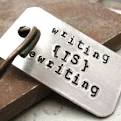
writing-is-rewriting

What’s the deal, you ask?

Just as a refresher: re-writing is hard; looking at what’s not working with your characters and plot points and themes and secondary everything can be a nerve-wracking, soul-sucking, insecurity-making exercise; and a lot of people listen but never try many of the basic, not-so-hard-to implement exercises I recommend. Which is too bad, because learning to rewrite (and we’re all ALWAYS learning, with every new project) is your job. It’s not an option. And I can’t tell you the number of clients who fade away or students whose enthusiasm wavers after a course ends or followers contact me years later to say they still haven’t finished that book they were working on back when, but they’ve started 5 new ones since…and not finished them, either.

Which is unfortunate, sad and avoidable. Just do the work (or in this case the re-work). Do it. We all have to. All of our pretty babies are drafted in the shadows of “ugly.”

writing-pen1-300x199

It’s madness to think yours won’t, and inexcusable as an artist to let your creative drive for approval (especially your own) block you from learning and applying the craft that will better enable you to bring your unique voice and vision and stories to readers who are languishing these days, in a sea of often poorly-written, poorly constructed, badly delivered free or so-close-to-free-it-doesn’t-matter digital content.

Rant almost over. Except to say this: make what you create matter as viscerally and beautifully and impactfully (not a word, but you get the gist) as it can, by understanding it, honing it, and ruthlessly re-working it to the best of your ability. Continue reading “How You Re-Write 3: Method over Madness”

How You Re-Write 2: Actually, it’s Beginning-END-Middle…

This is how we isolate what we’ve done with a character as we draft, vs. what we meant to do, or what we think we’ve done. This is how we deconstruct.

Re-Writing Lesson 2 is all about taking a closer look at my recommended method for using the B-M-E Chart!

Or, if it helps you more easily remember today’s discussion… My Beginning-End-Middle Chart.

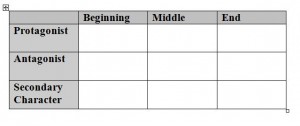
BME-Table1-300x126

First, be sure if you haven’t to brush up on Rewriting Lesson 1, where I begin discussing my methods and philosophy for deconstructing and re-writing manuscript drafts.

Then grab all those notes you’ve made from your own Work-in-Progress, because you did your homework and have been looking at your current draft, right? Right?! And maybe you had a bit of a struggle encapsulating what’s happening with your characters at these key story turning points (Inciting Incident, Midpoint, and Black Moment). If so, welcome to the club. These aren’t high concepts most of us have nailed down when we first begin to draft.

So, let’s take another stab at it. Even if you’re happy so far with what you’ve learned about your story from using the chart, indulge me and lean into Lesson 2 and your draft with a fresh set of eyes.

The B-M-E Chart Process

Some quick definitions as we begin. Just summaries, for the sake of this exercises and post.

  • Inciting Incident: the first key turning point in a manuscript, when something happens that has never happened before, propelling the protagonist and antagonist together into the external flow of the story.
  • Midpoint: the center-most turning point in the manuscript, the tent post “propping up” the external and internal arcs of the story;the “ah-ha” moment when the protagonist realizes the “true” goal/conflict of her/his journey and pivots (through a shift in motivation) toward pursuing the objective that will drive her choices and actions for the second half of the novel.
  • Black Moment: the pinnacle moment where all that is at stake for the protagonist is revealed and all hope is lost if the the protagonist hasn’t learned enough throughout the story’s arc and/or isn’t ready to make the no-going-back, life-changing choice being asked of her.

Step 1: Can you isolate these turning points in your draft?

Not theoretically, not as you think back about what you meant to do with your story. Actually, physically, can you turn to these places in your printout (PLEASE, when you’re deconstructing a drafted work-in-progress, print it out and work with a hard copy. I swear, developmental/content editing is so much more effective at the analytical stage if you work with hard copy rather than scrolling through a digital copy)?

seriously-300x248

I have a method I’ll describe in a later re-write lesson for isolating specific scenes while deconstructing a novel, and how to learn the most you can from that exercise. But for now do the best you can and put your finger on when these three critical events happen to your protagonist. Not what you planned to do, or what you meant to do, but what you physically wrote as you drafted. Continue reading “How You Re-Write 2: Actually, it’s Beginning-END-Middle…”

How You Re-Write 1: Revise with the B-M-E Chart

Rewriting isn’t an easy friend. It’s overwhelming work, and creative fatigue and doubt and frustration can win the ensuing battle if you let them. But you’re a professional writer. Say it with me, “I’M A PROFESSIONAL WRITER.”

Re-writing is your friend. No, seriously. Re-writing is your BEST creative friend of all… Revisions, if you will. But when I teach and keynote and author coach and content edit, I make a clear distinction between line and copy editing and proof reading and the creative work of developmental editing, also known as re-writing.

And since for most of us mere mortals, our first full draft of a project rarely tumbles out of our brains fully realized, just dying to be written, part of our job–arguable the most important part of your job–is re-crafting that draft until it’s its best self. And that ain’t easy. In fact, resistance to re-working and re-writing and re-imagining the whole that’s sprouted from that kernel of an idea that drew you to write a story is the Number One reason a lot of authors never publish traditionally, and why a great deal of independently-published novels will never find a home in a reader’s heart.

Rewriting isn’t an easy friend. It’s overwhelming work, and creative fatigue and doubt and frustration can win the ensuing battle if you let them. But you’re a professional writer. Say it with me, “I’M A PROFESSIONAL WRITER.”

And your job is to take control of your creative process every step of the way. And for the purposes of this How You Write post, your job is to rewrite your draft for however long it takes for the story and characters and journeys you’ve created to connect with the reader on every level possible. You’re the boss, not the draft. You’re ready to work through the exhausting process of diving back in over and over. Really, you are ;o)

The way to do that?

Simple.

No, the process isn’t simple. But you job is, so to speak. All you have to do is break your draft down into simple parts, so you can effectively execute the work left to be done in manageable chunks.

Simple

When you’re drafting with a plan (and you have a plan, right?) or rewriting with plan (because you revamp your plan for your story before you rewrite, right?), you give yourself a chance to conquer the overwhelming, sinking feeling that you can’t succeed at something as complex as creating a novel. Continue reading “How You Re-Write 1: Revise with the B-M-E Chart”

Welcome to How YOU Write!

Writing is your gift, it’s how you enter the world. Learning how better to do what you do is the challenge I’m grateful to assist you with, any way I can.

This is your blog as much as mine.

I’m an author first, editor second. Well, technically, I was an editor first (working years as a Senior Technical Writer years before I published fiction). But I learned long ago that it’s all about the writing… THEN it’s all about the editing.

Anyone can learn how to edit better, how to make craft techniques your own, and how to better reach readers with amazing stories. YOUR stories. Still, you must create with your own unique voice the stories that only you can tell. Writing is your gift, it’s how you enter the world. Learning how better to do what you do is the challenge I’m grateful to assist you with, any way I can.

fail only if sto pwriting

As I travel and teach and give keynotes and instruct at weekend masterclasses and one-day, intensive events, I empower students to create passionately, edit with confidence, and set their unique voices free.

The same with my author coaching and editing clients, whom I help develop proposals, partials and full manuscripts; work with on content (developmental) editing at whatever creative stage works best for the author and project; copy edit for once a project is complete; and teach on a monthly basis as an author coach, providing custom-designed instruction that helps them master key writing and editing techniques.

The focus of all of that I do? To take the author and manuscript to the next level. My job is to help YOU write better and be empowered to set the bar for your work and stories and the resulting reader experience ever higher.

More coming soon on all the above, as I move my How You Write blog series to this site, share details about my editorial and speaking services, and offer monthly craft workshops–snippets of some of the work I do with clients and students.

In the meantime:

Then check back here for craft and inspirational posts you don’t want to miss!